

Last updated November 18, 2026
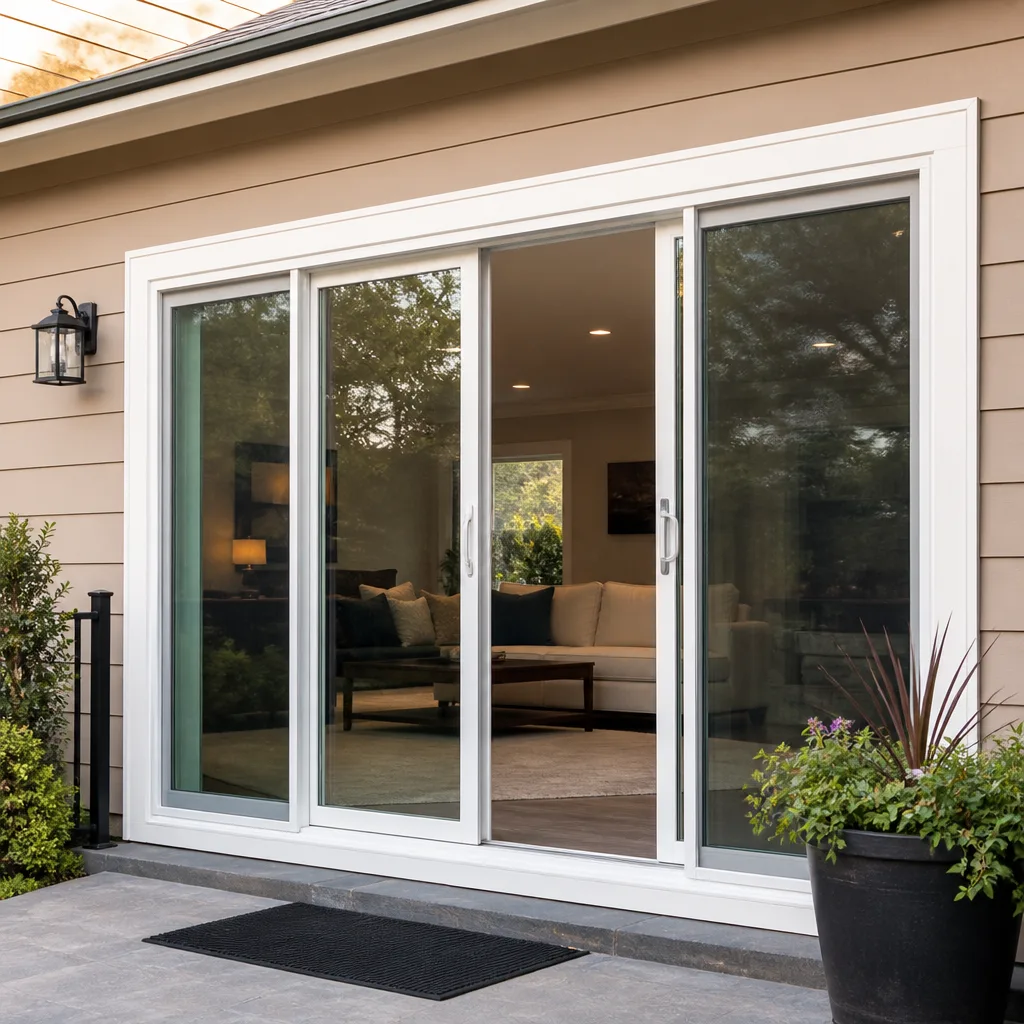 Sliding glass doors
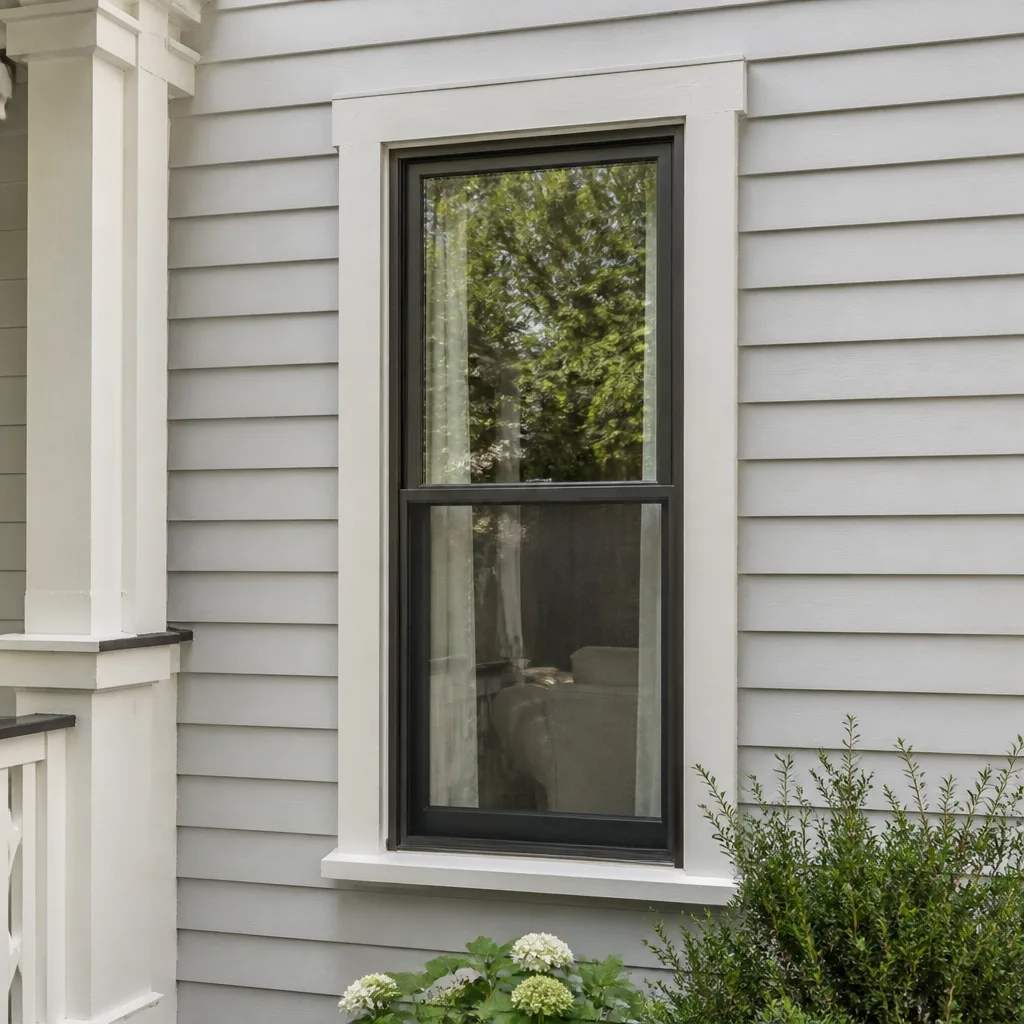 Single hung
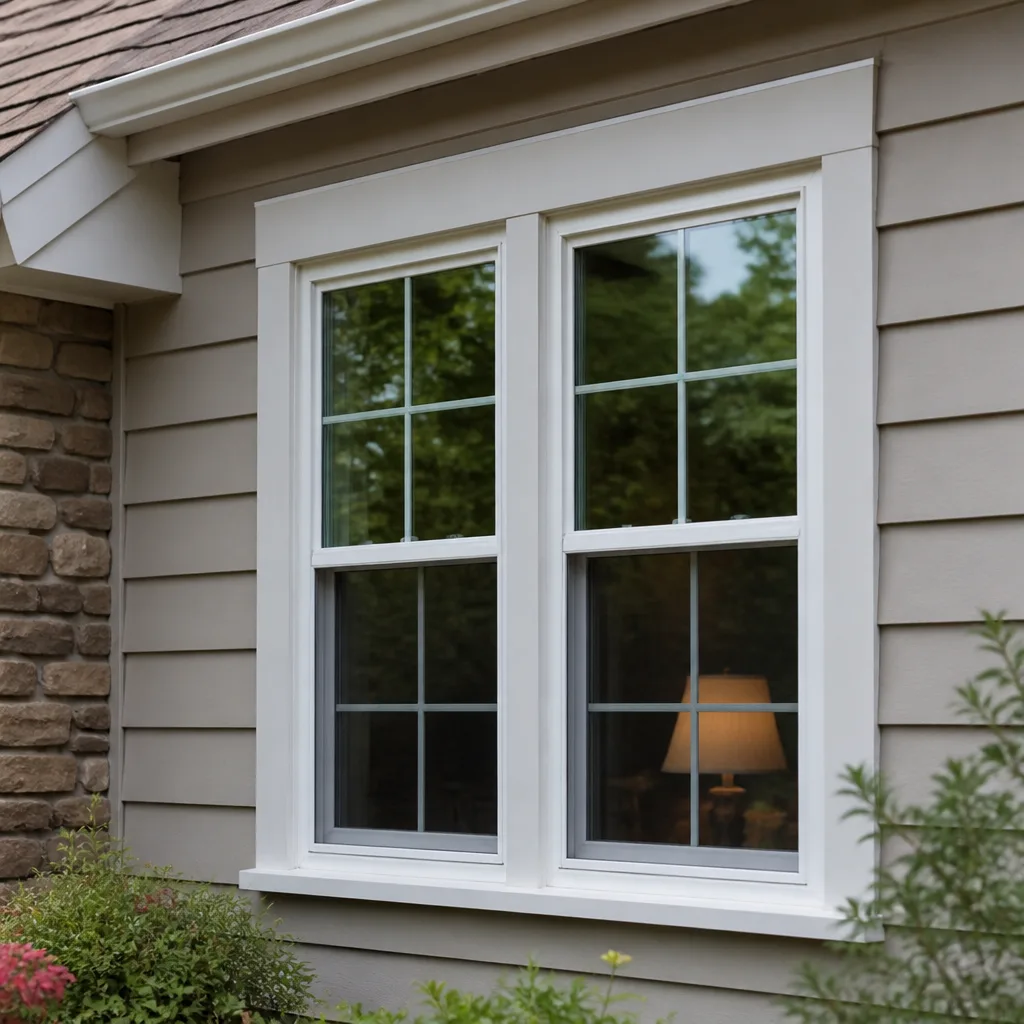 Double hung
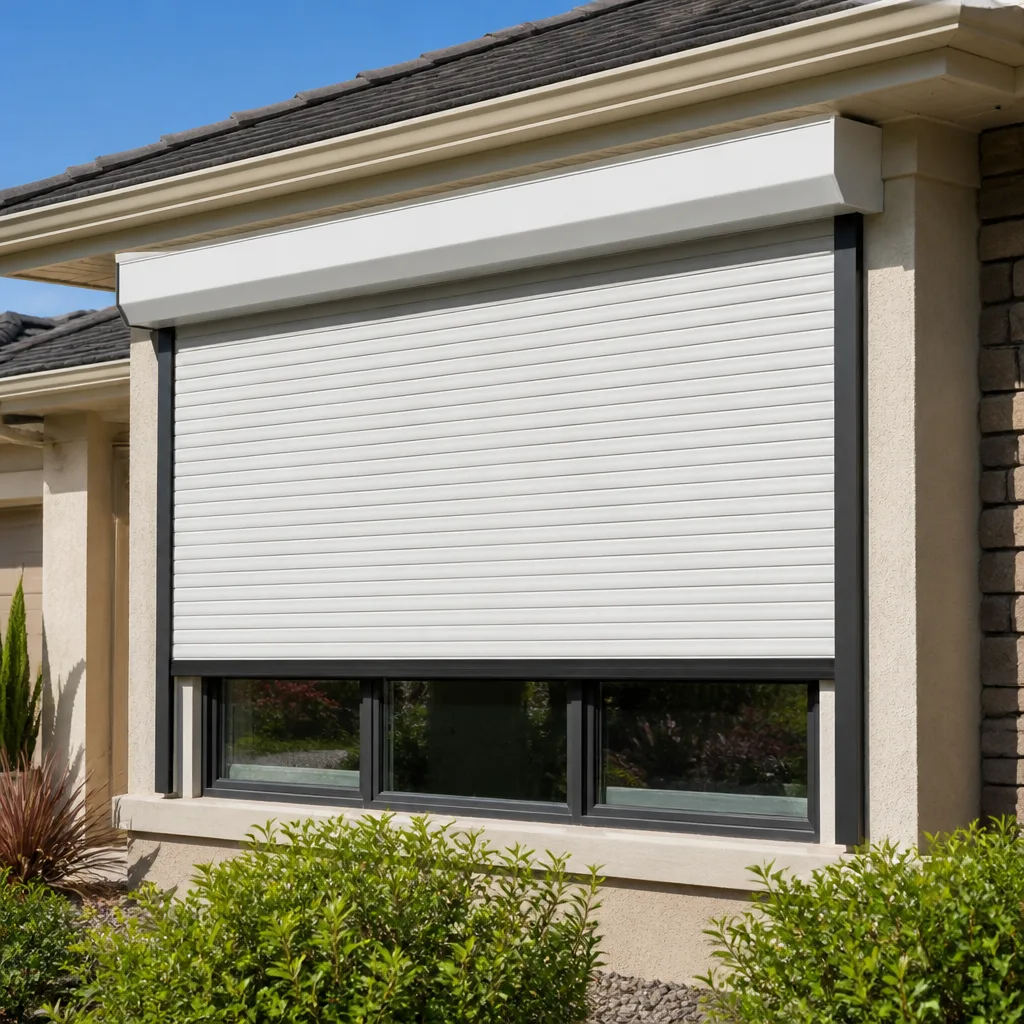 Horizontal roller
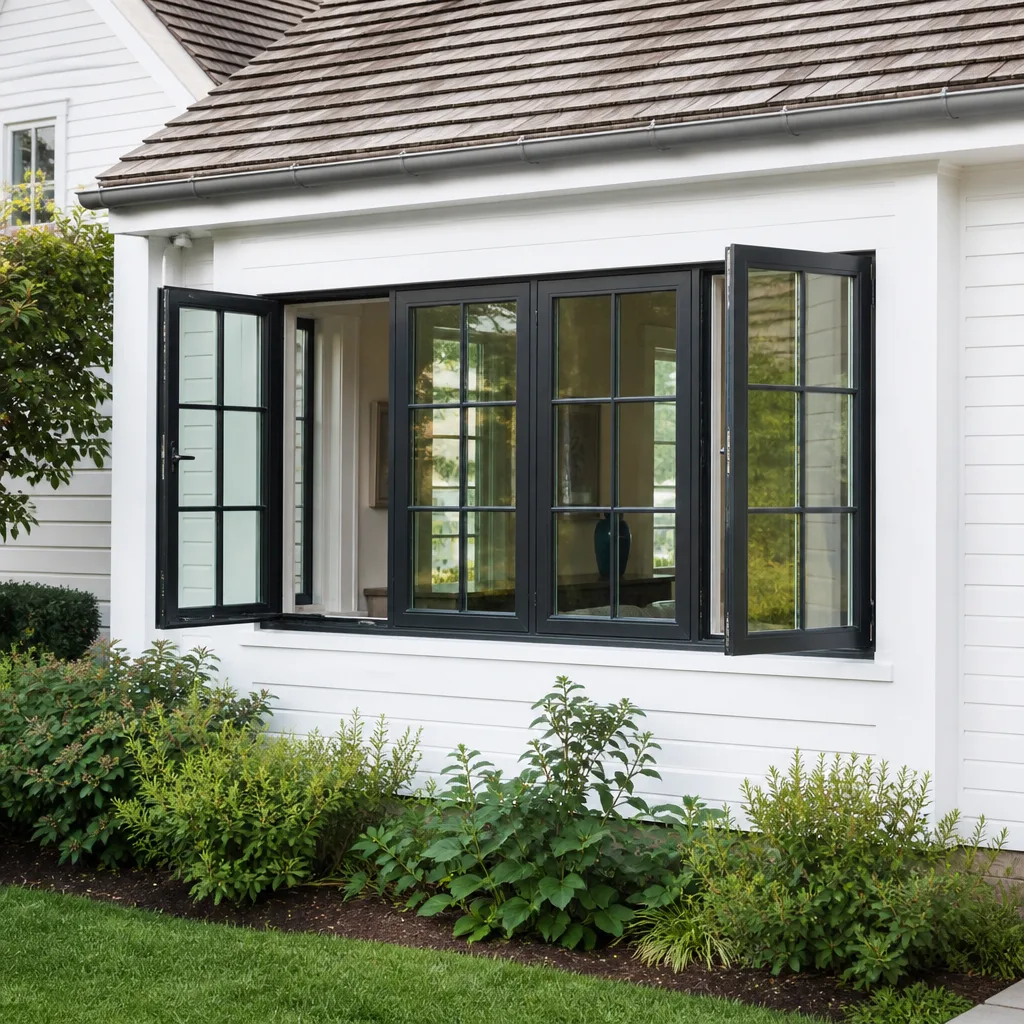 Casement
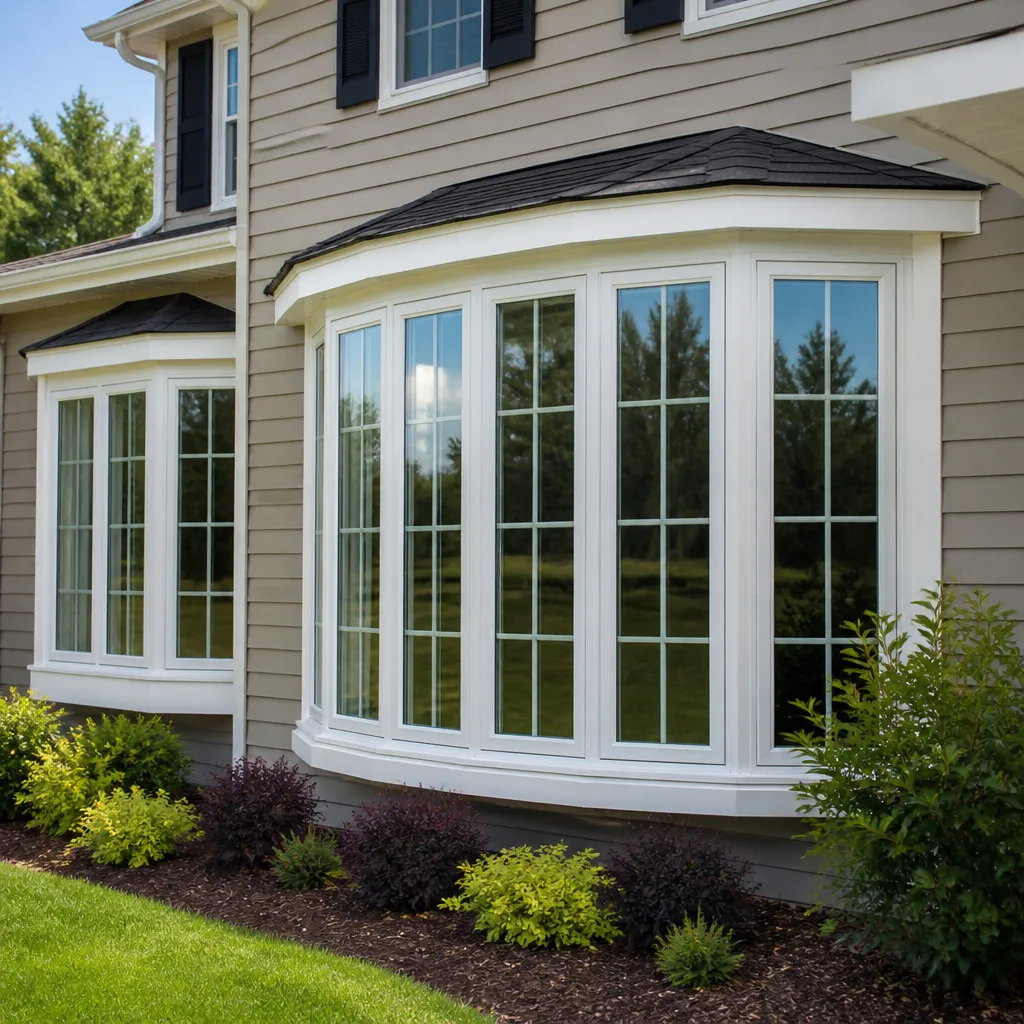 Bay & bow
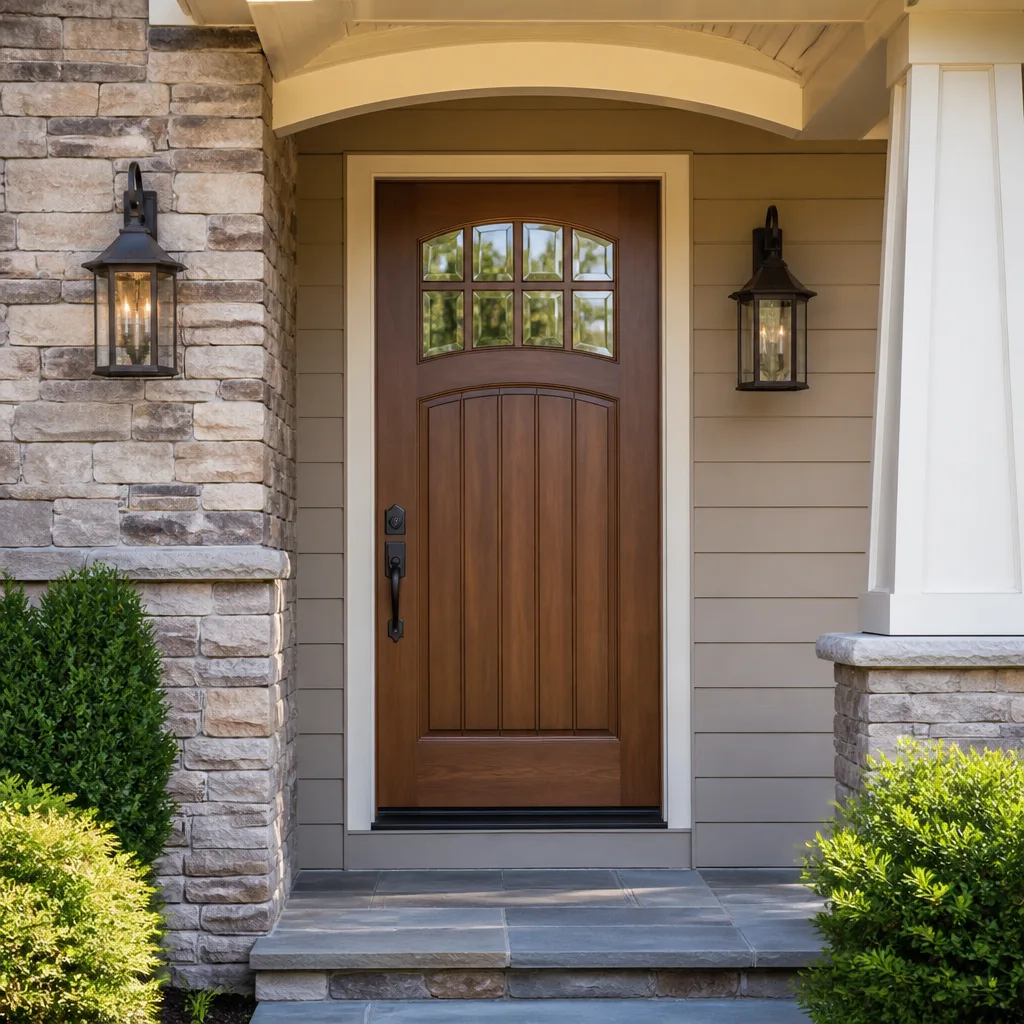 Entry doors
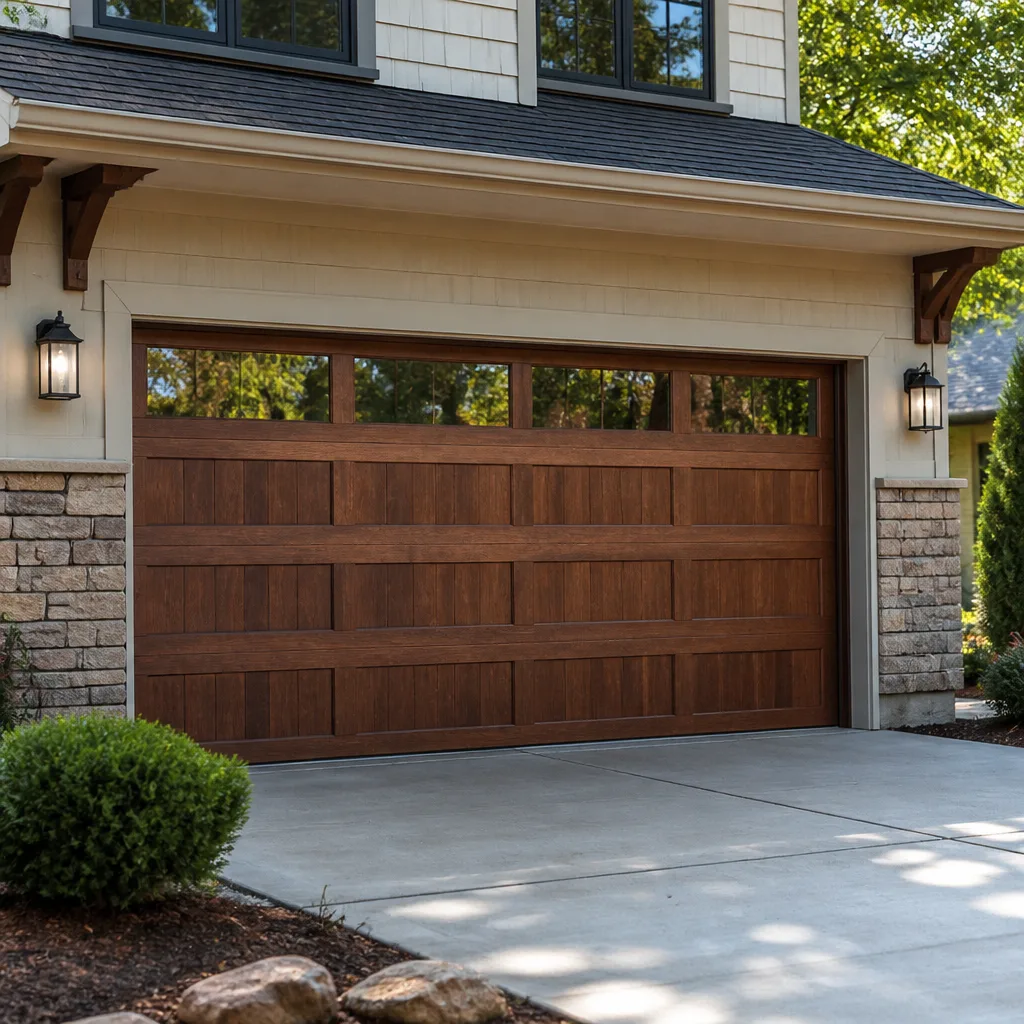 Impact garage doors
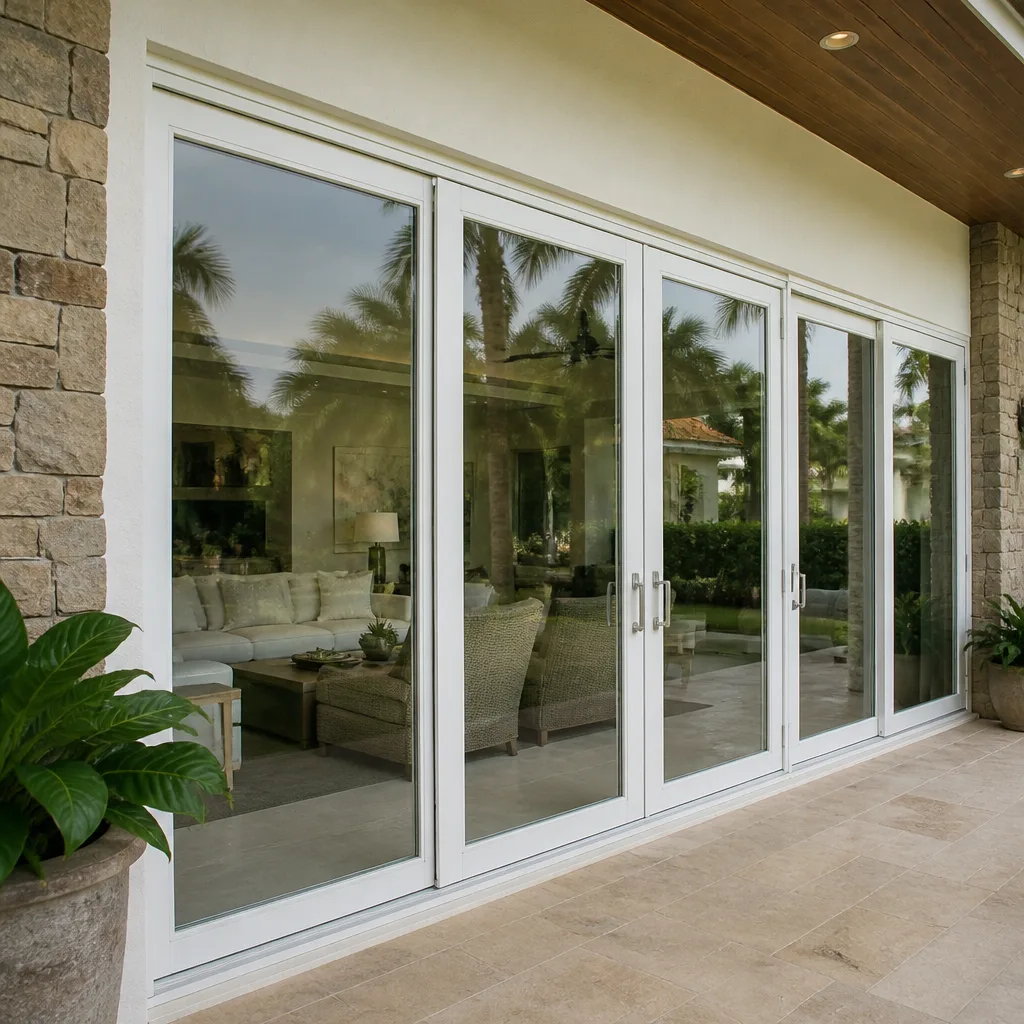 PGT
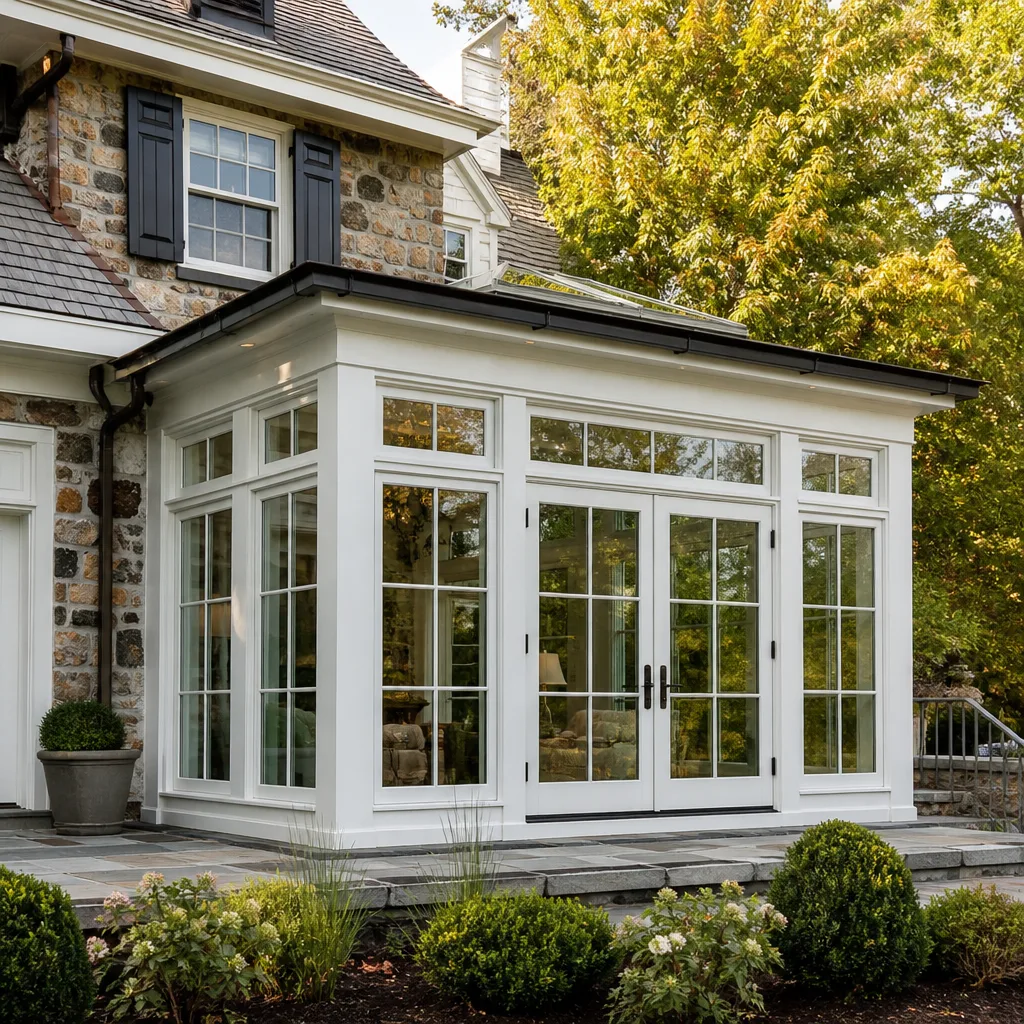 CGI
Free in-home measure and quote - PGT, CGI and CWS impact lines compared on your actual openings, style by style
Get your free estimateHow to Hire a Windows & Doors Contractor in Paradise: A Step-by-Step Guide
Nevada’s contractor licensing board has logged hundreds of complaints against window and door installers over recent three-year stretches, and the pattern is eerily consistent: the paperwork looked clean, the crew showed up, the work got signed off, and the failure showed up a year later when the homeowner tried to call someone back. What separates a contractor who stands behind the job from one who disappears is rarely on the estimate. It’s in the answers to three or four questions most homeowners never think to ask. This guide walks through exactly which questions those are, how to verify a Nevada license in under 90 seconds, and how to read a warranty before you sign. If you’re hiring in Paradise, this is the playbook we wish every neighbor had before they called us.
Quick Answer
To hire a windows and doors contractor in Paradise, verify their Nevada State Contractors Board license and class first, then ask who actually performs the install and whether they pull the permit in their own name. Read the warranty for maintenance and “acts of God” clauses that shift liability back to you, and insist on an in-person site visit that includes real measurements, not a photo-based quote. A qualified contractor answers all of it without flinching; an unqualified one answers around it.
Styles & brands we work with
- Single hung
- Double hung
- Horizontal roller
- Casement
- Bay & bow
- Sliding glass doors
- Entry doors
- Impact garage doors
- PGT
- CGI
Table of Contents
- Step 1: Verify the Nevada License Class That Actually Covers Window and Door Work
- Step 2: Ask Who Pulls the Permit and Who Handles Inspection Sign-Off
- Step 3: Spot the National Chain Subcontractor Model Before It Costs You
- Step 4: Read the Warranty for the Two Clauses That Transfer Liability Back to You
- Step 5: Run the Site-Visit Test: Measurer vs. Salesperson
- Why Paradise Installations Fail Differently Than Everywhere Else
- The Four Questions That Expose an Unqualified Installer
- How to Compare Bids Apples to Apples
Step 1: Verify the Nevada License Class That Actually Covers Window and Door Work
Nevada licenses contractors by classification, and a window and door installation isn’t covered by every class that will happily bid on it. The one you want to see on the paperwork is C-17 (which covers finished carpentry and, in practice, most window and exterior door installation work), or a general contractor classification paired with a specialty license that specifically names glazing, doors, or windows. A contractor holding only a handyman exemption or an out-of-state license is not licensed to do this work in Nevada. Period.
Here’s the 90-second verification that most homeowners skip:
- Go to the Nevada State Contractors Board website (nscb.nv.gov) and open the license lookup.
- Type in the license number from the contractor’s bid or business card.
- Check that the status is Active, not suspended, expired, or in a complaint resolution.
- Check that the classification matches the work (C-17, or the specific specialty you’re hiring for).
- Check the monetary limit – this is the maximum single job value they’re bonded to handle. If your project is a whole-house window replacement at $28,000 and their limit is $15,000, you have a problem.
- Scroll down to complaints and disciplinary actions. A single old complaint isn’t disqualifying; a pattern in the last 24 months is.
If the contractor can’t give you a license number before you ask twice, that’s your answer. A legitimate Paradise installer keeps the number visible on the estimate, the truck, and every page of the paperwork. It’s not a secret – it’s the point.
What “Licensed and Insured” Actually Means
“Licensed and insured” gets repeated so often it stops meaning anything. Ask for the certificate of insurance directly and check that the policy is general liability (protects your home from damage) and workers’ compensation (protects the crew, which protects you from a claim if someone is hurt on your property). A contractor with liability but no workers’ comp is one injury away from a legal headache you didn’t sign up for. And the local pro is licensed and insured as the state of Nevada requires; that’s the minimum bar.
In our experience working across the Paradise and Las Vegas valley market, the contractors worth hiring hand over their insurance certificate without being asked. The ones who get cagey about it are telling you something. For a broader look at what professional installation looks like, see our guide to window installation in Sandy Valley.
Step 2: Ask Who Pulls the Permit and Who Handles Inspection Sign-Off
“We pull all permits” has become the minimum bar, not a selling point. Every legitimate installer says it. What separates them is the next question: who actually walks the inspection? The permit-holder is legally responsible for the work passing inspection, and if the permit is pulled by a subcontractor or under a shell license, you may not have a clear answer about who shows up when the county inspector asks questions.
Clark County permits for window replacement and door installation involve inspection sign-off on:
- Egress sizing on sleeping-room windows (they have to open wide enough to escape through)
- Impact rating and product approval – the installed unit must match the approved product on the permit
- Flashing and weather-sealing at the rough opening
- Anchoring and structural fastening for door headers and large picture windows
Ask this: “Will the person running the install be at the inspection, or will someone I’ve never met show up?” The answer matters. If the permit is pulled in one company’s name and a different crew installs the work, the inspection process can become a hot potato – and you’re the one holding it when something fails.
Why Paradise Specifically Needs the Permit Pulled Correctly
Paradise sits within Clark County’s jurisdiction, and the inspection footprint is real. Older housing stock in areas like the neighborhoods near the Strip corridor and along Tropicana has been renovated and re-renovated, which means the as-built reality of your house may not match what the permit record shows. A contractor who pulls the permit properly and handles the inspection sign-off is confirming that the product approved for your address is the product actually installed. That’s not paperwork busywork – it’s your insurance policy if the home is ever sold or refinanced, and it’s the difference between a job that passes and one that has to be redone.
Step 3: Spot the National Chain Subcontractor Model Before It Costs You
Here’s the model most homeowners don’t recognize until it’s too late: the company whose name is on the yard sign sells you the job. A third-party crew – often a rotating cast of subcontractors – shows up to install. When something goes wrong, the seller says the installer is responsible and the installer says the seller’s product specs are wrong. Nobody local owns the outcome.
You can spot this model with three questions:
- “Who will actually be on my property installing the windows?” If the answer is “an authorized installation partner,” you’re looking at the subcontractor model.
- “Is the person doing the install a W-2 employee or a 1099 sub?” Employees have workers’ comp, training records, and a supervisor. Subs have none of that on your job.
- “Who do I call in two years when a window leaks?” If the answer routes to a national call center that opens a ticket and dispatches a regional contractor, you don’t have anyone accountable.
This isn’t an attack on every national company. Some of them do excellent work. But in Paradise, where a failed window seal means monsoon-season water intrusion and UV destruction of the interior sill, the ability to call a local person who actually installed the window is worth real money. Locally owned and owner-operated means something concrete here: the owner’s name is on the door, and the person who answers the phone at 2 a.m. is not in a different time zone. If you want to see the difference in the products themselves, our guide to impact windows in Sandy Valley digs into what impact-rated glass actually does in Southern Nevada heat.
The Tell: Where the Estimate Comes From
Ask the company where their estimate will be produced. A locally accountable Paradise contractor produces it in their office on your address, after a site visit, and can walk you through each line item. A chain subcontractor model often produces the estimate out of a regional office, sometimes without anyone visiting the property at all. Both can look similar on a piece of paper; only one can be defended to a county inspector two years later.
Step 4: Read the Warranty for the Two Clauses That Transfer Liability Back to You
A window warranty is only as good as the two clauses buried in the fine print. We’ve read hundreds of them, and the ones that fail homeowners in Paradise almost always fail for the same two reasons. Here’s how to find them before you sign.
Clause 1: The “Improper Maintenance” Language
Every warranty says that failure due to improper maintenance is not covered. That’s reasonable in principle. What’s unreasonable is a warranty that defines “improper maintenance” so broadly that any failure can be blamed on it. Watch for language like “failure to follow all maintenance guidelines” or “damage resulting from homeowner neglect” without specifics. In Paradise, where dust, wind-driven grit, and hard-water mineral deposits attack window seals and door hardware constantly, a vague maintenance clause gives the manufacturer an out on almost any failure claim.
What a fair clause looks like: it lists specific, reasonable maintenance tasks (cleaning weep holes, lubricating door hardware twice a year) and requires that a failure result directly from a documented failure to perform them. Ask the contractor to point to exactly which maintenance language applies and what tasks you’re on the hook for. A contractor who can’t answer that hasn’t read the warranty on the product they’re selling.
Clause 2: The “Acts of God” Carve-Out
Every window and door warranty excludes “acts of God.” That’s standard. What’s not standard is how broadly the manufacturer defines an act of God. Some policies specifically exclude “wind-driven rain,” “hail,” “sandstorms,” and “seismic activity” without naming a threshold, which means a severe monsoon storm or a windblown dust event that damages a window seal is arguably excluded. In Paradise, that’s not a theoretical risk – it’s a Tuesday.
Ask specifically: “What wind speed and weather event are excluded, and what’s covered?” Impact-rated products like the ones we install from PGT and CGI are tested against specific windborne-debris and pressure ratings, and the warranty should connect to those standards. If the warranty document doesn’t define its terms, that’s a red flag. Look for products where the warranty explicitly covers the conditions Southern Nevada actually produces, not just the ones some national template was written for.
The Third Clause Nobody Mentions: Transferability
Check whether the warranty transfers to a new homeowner. If you sell the house in five years, a non-transferable warranty means the next owner gets nothing, and you may end up taking a price hit at sale. Transferable warranties – even with a registration requirement – are worth real money. For energy-conscious replacements specifically, see our guide to window replacement in Sandy Valley to understand how product selection affects long-term warranty performance.
Step 5: Run the Site-Visit Test: Measurer vs. Salesperson
A real contractor measures your windows on the first visit. A salesperson takes photos and promises a quote later. That distinction is the whole game, because what gets measured determines what gets ordered, and what gets ordered determines whether the install fits.
Here’s what a knowledgeable contractor does on a first visit and what a salesperson skips:
- Measures the rough opening, not just the visible glass. Window replacement requires knowing framing dimensions, not just the trim-to-trim measurement.
- Checks the wall substrate. Stucco, brick veneer, and wood-frame walls in Paradise homes each need a different installation and flashing approach.
- Pulls the existing window tag or manufacturer plate if accessible, so the replacement matches the structural opening and impact rating.
- Tests the existing door’s plane and threshold – a patio door that sticks or leaks isn’t just a bad product; it’s a sign of settlement or header deflection that a photo won’t reveal.
- Notes adjacent damage that will show up when the old unit comes out (dry rot, flashing failure, stucco cracks) so the estimate accounts for it instead of adding it later as a change order.
- Checks the access path for delivery of large units, especially second-story or gated properties.
- Asks about interior finish and trim expectations, because the install’s appearance depends as much on the trim work as the glazing.
A salesperson quotes from photos, gives you a “ballpark,” and the change orders start when the crew finds the rough opening is 3/8 of an inch larger than expected. A measuring contractor writes a quote you can hold them to. If a company won’t come out to measure before quoting, keep shopping. For a broader look at what local installation should include, see window installation in Sandy Valley.
Why Paradise Installations Fail Differently Than Everywhere Else
Paradise windows and doors face conditions that don’t exist in most of the country, and a contractor who quotes the same way they would in Ohio is going to leave you with a failing install. Three factors dominate:
Heat Cycling and Seal Failure
Summer surface temperatures on west-facing windows routinely exceed 160°F in Paradise. That constant thermal expansion and contraction, day after day, is what destroys seals and causes fogging between panes. Cheap insulated glass units (IGUs) fail on heat cycling faster here than anywhere else. Impact-rated glazing and higher-grade sealant systems are not a luxury in Paradise – they’re the minimum for a window that lasts.
Dust and Wind-Driven Debris
Spring wind events pick up fine desert dust and drive it against window frames, door thresholds, and sliding door tracks. A window installed with a sloppy weather seal will be sandblasted into premature failure. The install details – flashing, backer rod, sealant bead placement, weep hole positioning – matter more here than they do in wetter climates, because the failure mode is grit, not just water.
Monsoon and Flash-Flood Risk
Paradise gets the same July-through-September monsoon season as the rest of the Vegas valley. Wind-driven rain against a poorly flashed window finds every gap, and a sliding patio door with a failed threshold seal becomes a water entry point. A knowledgeable installer plans for monsoon exposure during the install, and products with tested water-infiltration ratings outperform cheaper alternatives by a wide margin.
Home Age and Renovation History
Paradise’s housing stock spans from 1960s-era ranch homes to newer builds, and many properties have had multiple replacement rounds. Rough openings may no longer match the original framing plan. Impact ratings on adjacent windows may be inconsistent. A contractor with real local experience knows to look for that, and the difference between a simple replacement and a complex retrofit is usually determined during the site visit, not at the sales table. For area-specific detail, our Winslow Windows & Doors Paradise home page covers the neighborhoods we work in and the products we install there.
The Four Questions That Expose an Unqualified Installer
This is the heart of the guide. If you ask nothing else, ask these four questions. A qualified Paradise contractor answers all four in detail without hesitation. An unqualified one deflects, generalizes, or claims all four are “standard.”
- “What’s your Nevada license classification and monetary limit, and can you hand me the certificate of insurance right now?” A qualified contractor has it in the folder. An unqualified one says “our office will email it.”
- “Who specifically will be physically installing my windows – a W-2 employee or a subcontractor – and who handles the inspection sign-off?” A qualified contractor names the crew and the permit-holder. An unqualified one gives you a story about “partner installers.”
- “Walk me through the warranty’s maintenance clause and the acts-of-God exclusion on the specific product you’re quoting.” A qualified contractor can quote the relevant language or pull up the document. An unqualified one says “everything’s covered.”
- “What did you measure on this visit, and what could change the price once you open the wall?” A qualified contractor walks you through the measurements and names the conditions that would change the price. An unqualified one says “we don’t know until we start.”
Ask the questions, then watch the body language. You’ll learn more in ten minutes than in any review site.
How to Compare Bids Apples to Apples
The lowest bid is not the cheapest job. A window and door estimate is a stack of assumptions, and if the bids you’re comparing make different assumptions, the price comparison is fiction. Here’s a checklist for normalizing bids before you choose:
- Same products, same specs. Are both bids quoting the same impact rating, U-factor, and SOLAR HEAT GAIN (SHGC) number? A bid quoting a lower-spec window will look cheaper and won’t perform the same.
- Demo and disposal included? Some bids separate the removal and haul-off; others bundle it. Normalize.
- Flashing and weather-sealing in writing. A bid that doesn’t mention flashing and sealant is a bid that will add it as a change order.
- Trim and interior finish. Does the bid cover finish trim, or just the rough opening?
- Permit fees included or separate? Clark County permit fees run real money on a full replacement. Know who pays.
- Warranty term and transferability. A 10-year warranty that doesn’t transfer is worth less than a 5-year that does, depending on how long you’ll own the home.
- Payment schedule. A large deposit upfront is standard in some bids and a red flag in others. Know the schedule before you sign.
Once you’ve normalized the bids, the cheapest one usually stops being the cheapest. The one with the fewest change orders, the clearest spec, and a local person accountable to the warranty is the actual lowest cost. For more on comparing products within a bid, see the impact windows in Sandy Valley guide for spec-level comparisons.
Common Mistakes to Avoid
- Signing before the site visit. A quote produced from photos is a guess. Insist on a measuring visit; if the company won’t come out, they’re not serious about your job.
- Skipping the license lookup. Nevada’s public lookup takes 90 seconds and would have caught hundreds of complaints before they turned into claims. Do it every time.
- Accepting “we pull all permits” without asking who runs the inspection. Pulling the permit is step one. Being present and accountable for the inspection is what matters.
- Choosing the bid with the lowest number, without normalizing specs. A $3,000 difference on a $25,000 job usually means different glass, different flashing, or different trim – not a real savings.
- Not reading the warranty’s maintenance and “acts of God” clauses. Those two clauses can move liability from the manufacturer to you. Read them before signing, and ask the contractor to point to them.
- Ignoring the subcontractor chain. A national company that installs through rotating subcontractors has no single local person accountable for your job. Ask who the W-2 employee is on the install.
- Letting the contractor “handle” the inspection without documentation. Ask for the inspection sign-off document. If they can’t produce it, you may not have a compliant install.
See the difference
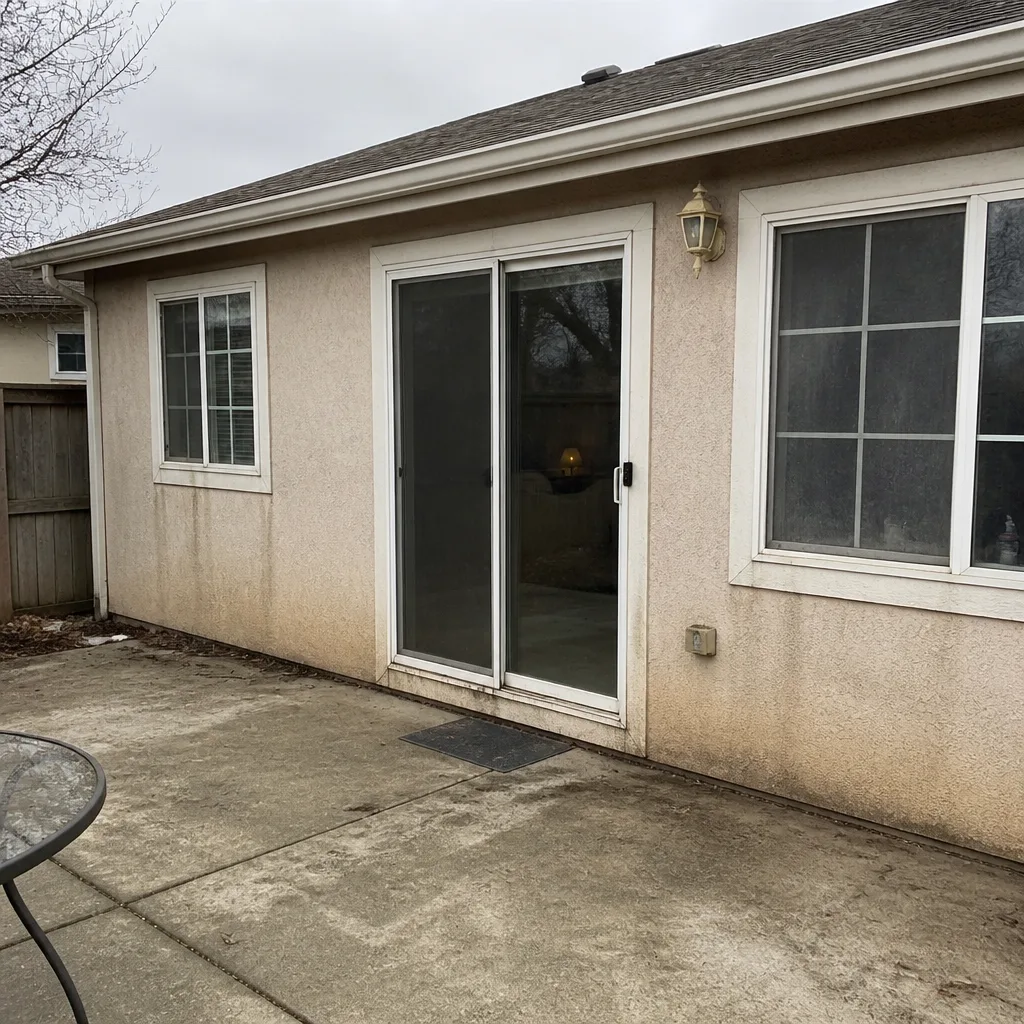 Before
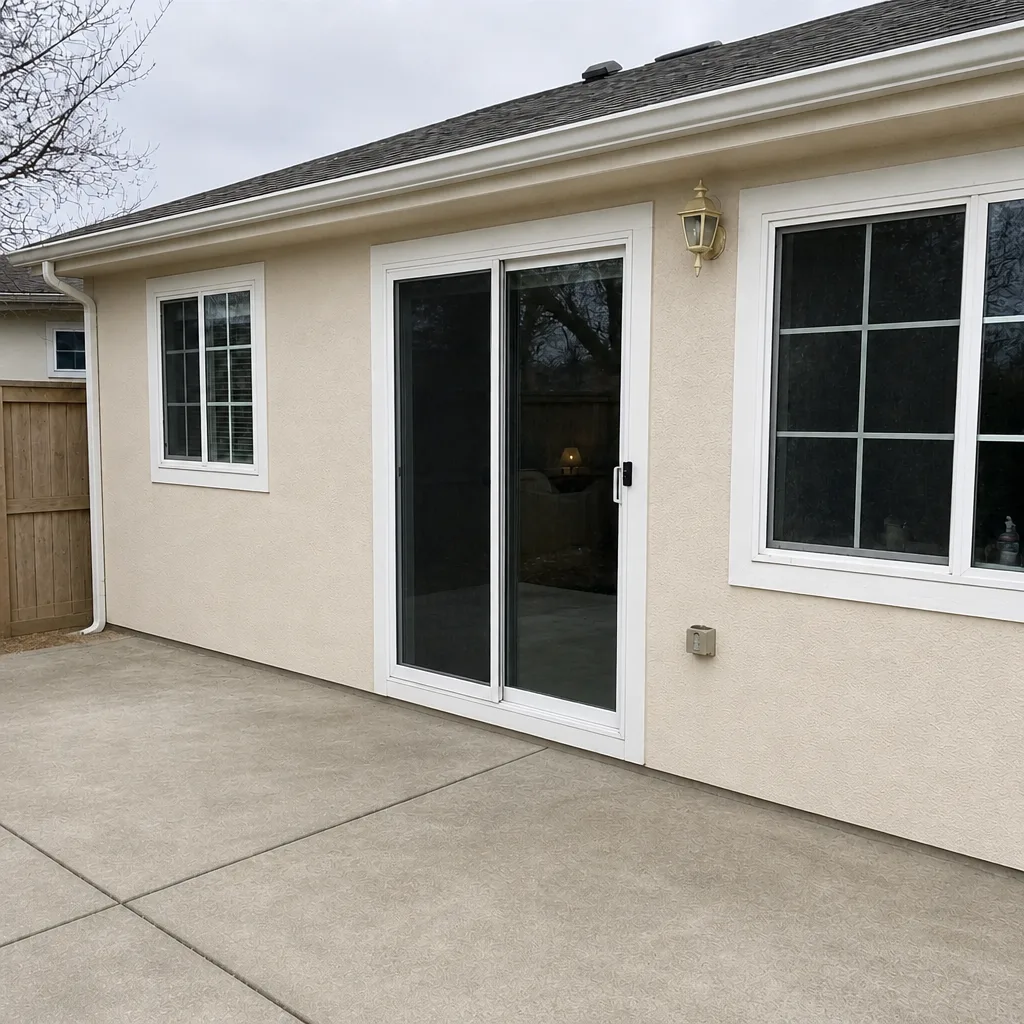 After
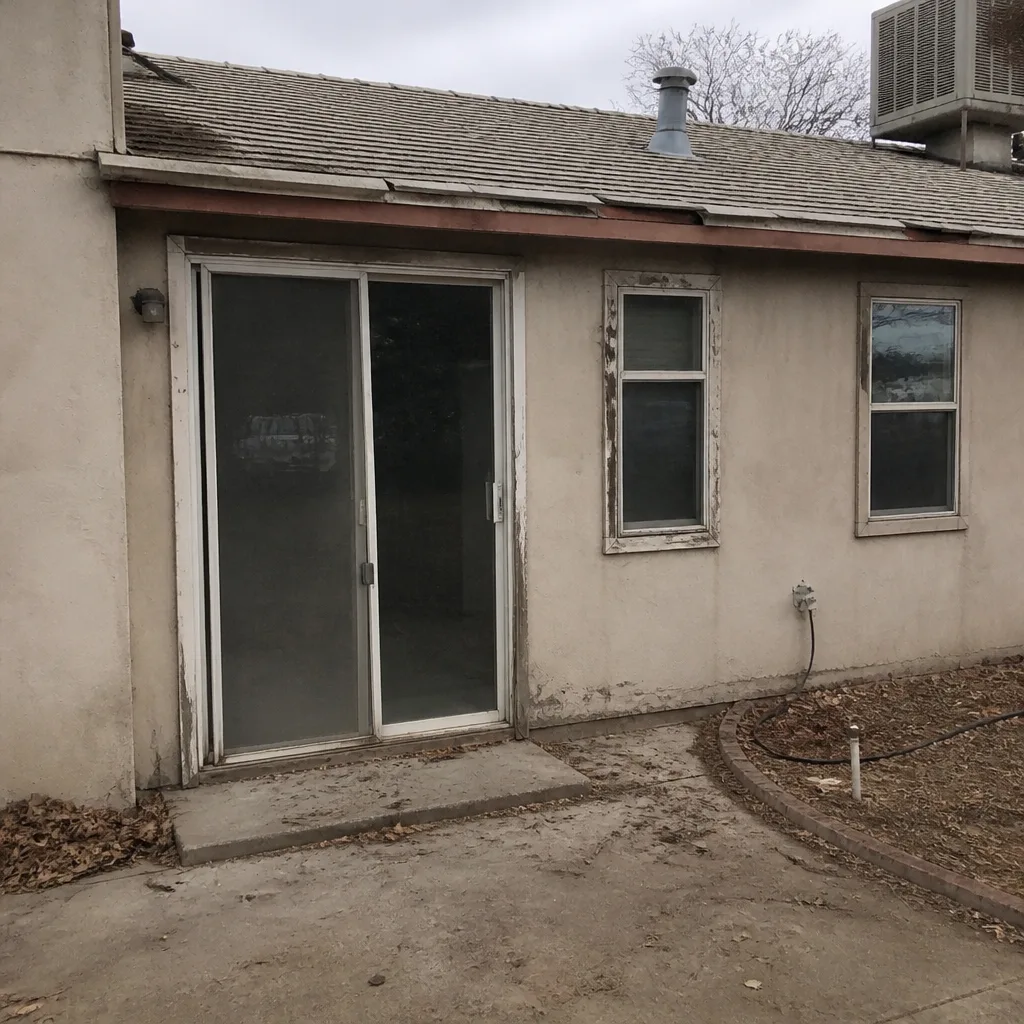 Before
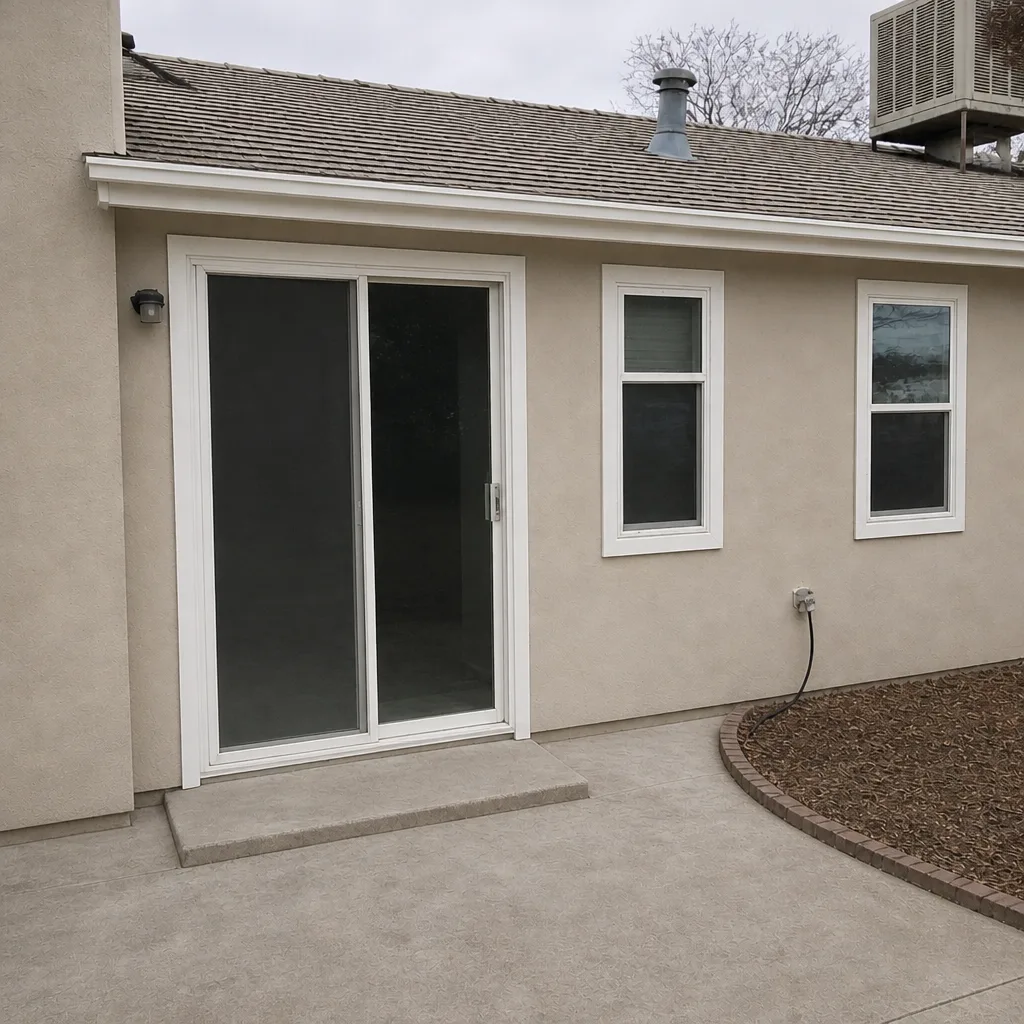 After
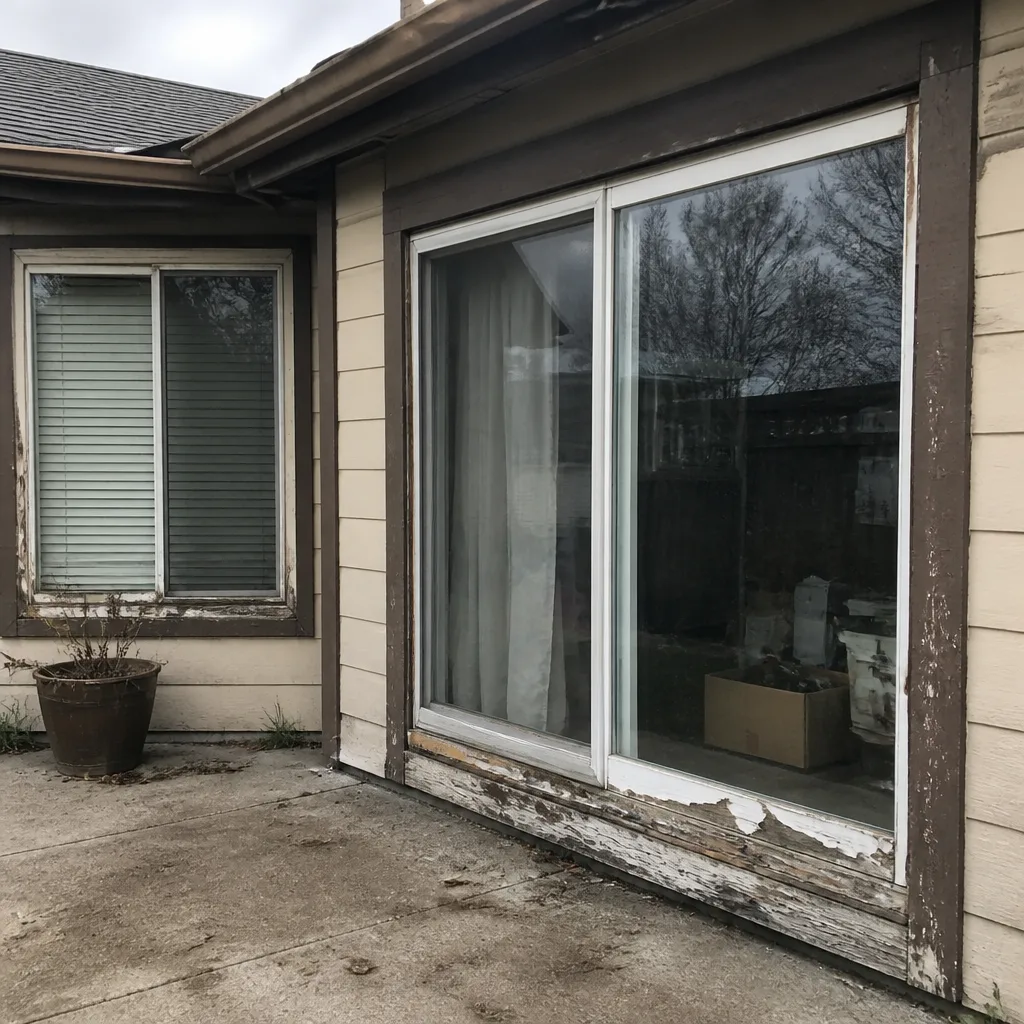 Before
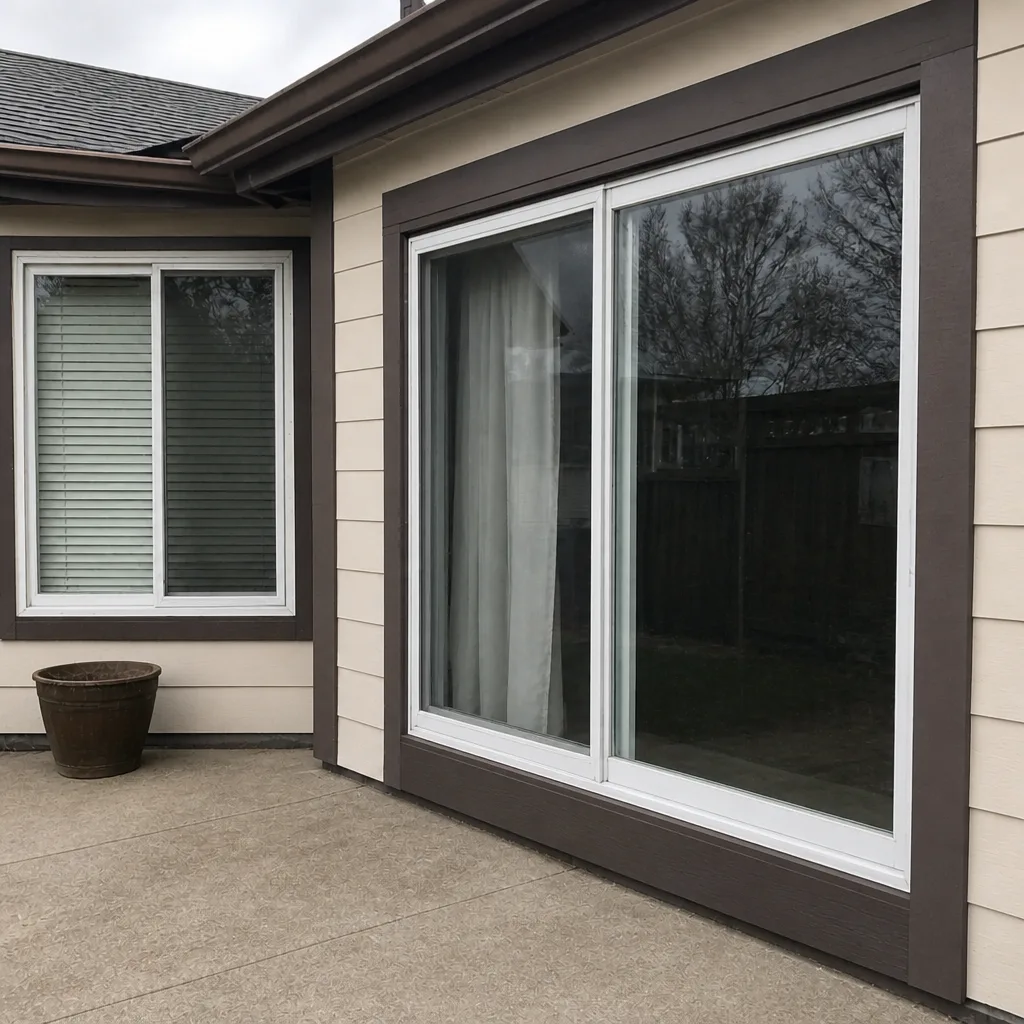 After
When to Call a Professional
Windows and doors look like simple carpentry, but in Paradise – with heat cycling, monsoon water intrusion, impact ratings, and Clark County inspection requirements – a failed install means water damage, energy loss, and a fight over the warranty. Call a professional when you’re replacing more than one window (matching proportions across a facade matters); when a sliding patio door sticks, leaks, or fails to latch; when you see fogging between panes (seal failure that can’t be repaired, only replaced); when the surrounding drywall or trim shows water staining; or when you’re planning a whole-home replacement and need to coordinate impact ratings, permits, and inspection. Impact-rated glass and door systems require specific structural anchoring, and a mistake there is expensive to undo.
Winslow Windows & Doors Paradise offers free estimates in Paradise – call (833) 958-8388. Our technicians carry up to 15 years of experience, show up in uniform, and have been background-checked before the first handshake. If it’s not done right, we make it right – that’s the 36500-Day Done Right Promise.
Frequently Asked Questions
Look for a Nevada State Contractors Board license classification that covers the work – typically C-17 (finished carpentry) for window and exterior door installation, or a general contractor paired with a specialty license for glazing, windows, or doors. Verify status is Active, that the classification matches your job, and that the monetary limit exceeds your project value. Call (833) 958-8388 for a free estimate with our licensed crew.
Standard window replacement in Paradise typically runs roughly $550 to $1,200 per opening depending on size, glass specs, and whether impact-rated glazing is specified, with whole-home projects in the $12,000 to $35,000 range. Sliding patio doors and larger custom units run higher. Call (833) 958-8388 for a line-item quote on your specific project – estimates are free and there’s no trip charge inside the home county.
It shouldn’t if the estimate was built on a real site visit with actual measurements. The most common reason a window install price changes mid-job is that the original quote was made from photos and the crew found unexpected conditions (rough opening size, dry rot, flashing failure). Insist on a site visit before signing; that’s how you avoid change-order surprises.
Yes – proper permitting is standard, and the contractor you hire should pull the permit in their own name and be present for inspection sign-off. Clark County inspects egress, impact rating, flashing, and anchoring. Ask to see the inspection sign-off document when the job completes. Call (833) 958-8388 to schedule a free estimate and we’ll walk you through the permit process for your address.
Most whole-home window replacements take two to four working days depending on the number of openings, the complexity of the install (second-story, stucco vs. wood siding), and weather. A single-window replacement usually takes half a day. Permit and product lead times run two to six weeks before the install date, so plan ahead if you’re on a deadline. Call (833) 958-8388 to schedule a free estimate and get a realistic timeline for your property.
Impact windows are rated to resist windborne debris and pressure changes, tested to specific standards – key in Southern Nevada where monsoon storms can throw debris. They also typically deliver better heat-cycling performance, which is a big deal in Paradise’s 160°F+ summer surface temperatures. Standard windows are usually cheaper and often fail sooner in this climate. Call (833) 958-8388 for a free estimate that compares the two on your specific openings.
The Bottom Line
Hiring a windows and doors contractor in Paradise comes down to verifying a license, confirming who installs the work and pulls the permit, reading the warranty for the clauses that move liability back to you, and insisting on a real site visit. Do those four things and the deals that look great on paper stop looking great; the local contractor with a named owner, an active C-17 license, and a crew that actually shows up on install day becomes the obvious choice. If a vendor dodges any of those questions, walk. The 36500-Day Done Right Promise is what that accountability looks like when it’s written down – and when it isn’t, you’ll find out about it in year three, when the phone number you have stops working.
Winslow Windows & Doors Paradise has been locally owned and owner-operated since 2011, installs elite brands including PGT, CGI, and Therma-Tru, and answers the phone 24/7 with a live person – not a call center. Call (833) 958-8388 for a free estimate. A neighbor you can call at 2 a.m., and someone will actually answer. The one down the road.
Written by the team at Winslow Windows & Doors Paradise.